
Every meal begins upstream
by Jay Elbrihi
Emmeline's recent piece on river-centred food systems made me stop and think about my own role within that system. As a chef, I've spent most of my career focused on what happens at the end of the supply chain. The plate. The produce. The experience of eating.
Every ingredient arrives carrying a story much larger than itself. A network of soil, water, labour, economics, ecology and culture. The story of a landscape. As chefs, we're often taught to judge food by its flavour, appearance and quality. Increasingly, I find myself asking a different question:
What had to happen for this ingredient to exist?
The answer is rarely simple.
Over the years I've been fortunate to spend time with farmers, Indigenous elders, Landcare volunteers and regenerative agriculture practitioners throughout the Northern Rivers. Those conversations have changed the way I think about food. What became clear is that food production doesn't simply happen on a landscape. It shapes the landscape.
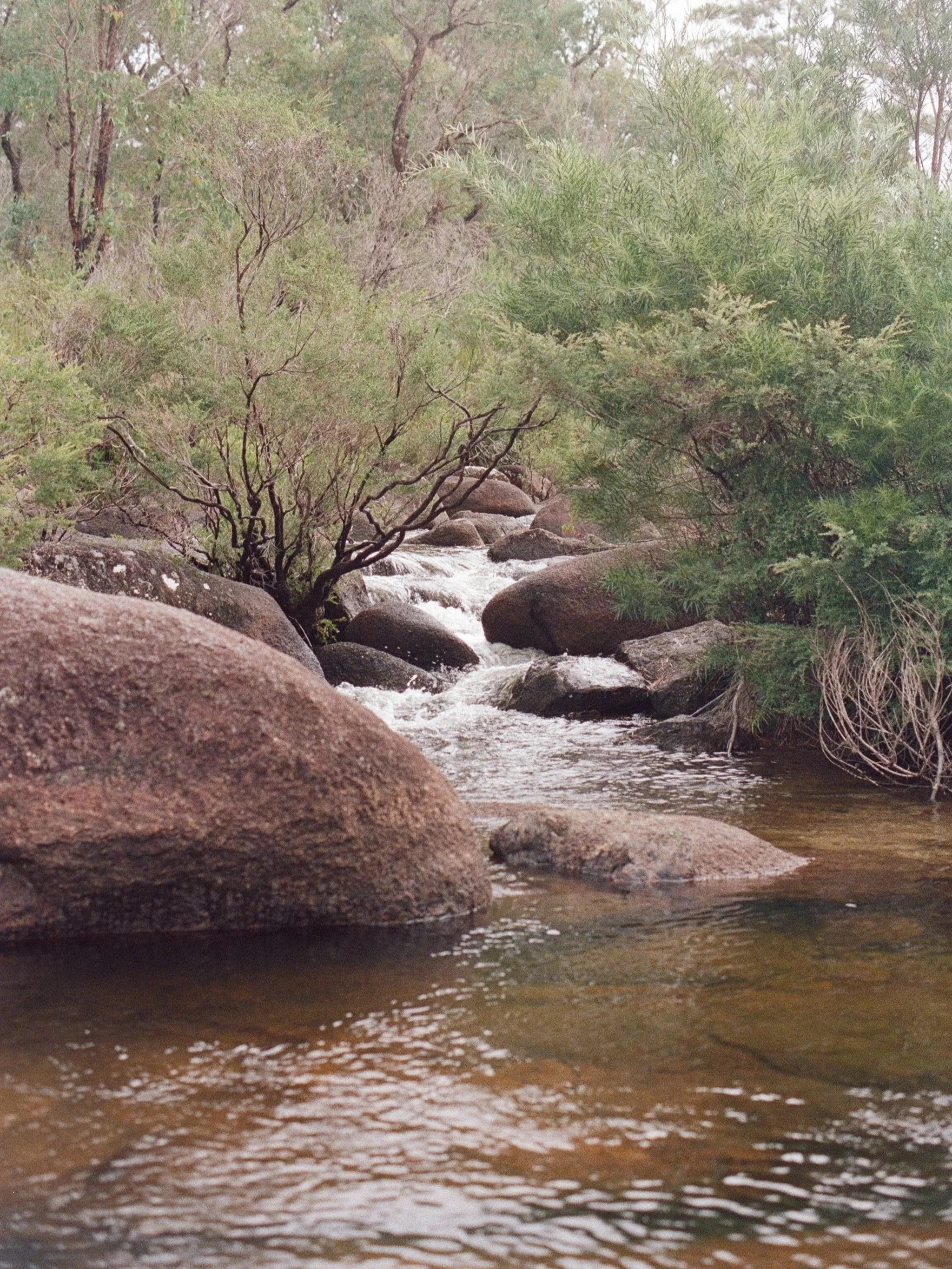
The condition of our rivers, soils, forests and wildlife is inseparable from the way we grow, distribute and consume food.Just as Emmeline writes that a river is not a thing but a consequence, perhaps the same can be said of a meal.
A meal is the visible expression of countless invisible decisions.
The crops we subsidise.
The farming systems we reward.
The species we value.
The labour we recognise.
The ecological costs we choose to ignore.
Much like chemical use in agriculture, many of these outcomes are often framed as matters of individual choice.
Consumers should buy better.
Farmers should farm differently.
Restaurants should source more responsibly.
These choices matter but they sit on the surface. The deeper story is structural.
Most farmers I know care deeply about the health of their land. Most chefs I know would prefer to buy from local growers who use regenerative practices. Most consumers would like access to food that is good for both people and the ecosystem. Yet we all operate within a system that rewards convenience, consistency and volume.
Just as agriculture can become locked into chemical dependency, food culture can become locked into patterns of extraction. The result is a food system that often treats healthy soil, clean waterways and biodiversity as desirable outcomes rather than essential foundations.
This is where I find hope in regenerative approaches such as syntropic agriculture, agroforestry, native ecosystem restoration and myco-regeneration.
Not because they offer perfect solutions. But because they shift the question.
Instead of asking how much we can extract from a landscape, they ask how much life a landscape can support.
Healthy soil becomes an asset.
Diversity becomes a strength.
Water retention becomes productivity.
Ecological function becomes part of the harvest.
The same principle applies in the kitchen…
What if we valued food not only for yield, appearance or price, but for the ecological relationships that produced it?
What if chefs became known not only for their cooking but for the landscapes they support?
What if restaurants measured success not just in the number of bums on seats, but in the health of the communities, farms and ecosystems connected to them?
And what if home cooks saw themselves not simply as consumers, but as participants in shaping the future of our food system?
Unlike many environmental issues, food offers us a unique opportunity.
We engage with it every day.
Three meals a day.
Three opportunities to participate in the kind of system we want to see. The choices of a single meal may seem insignificant but collectively:
They shape farms.
Farms shape landscapes.
Landscapes shape rivers.
And rivers, as we've been reminded, tell the story of everything upstream. Perhaps your dinner does too…