
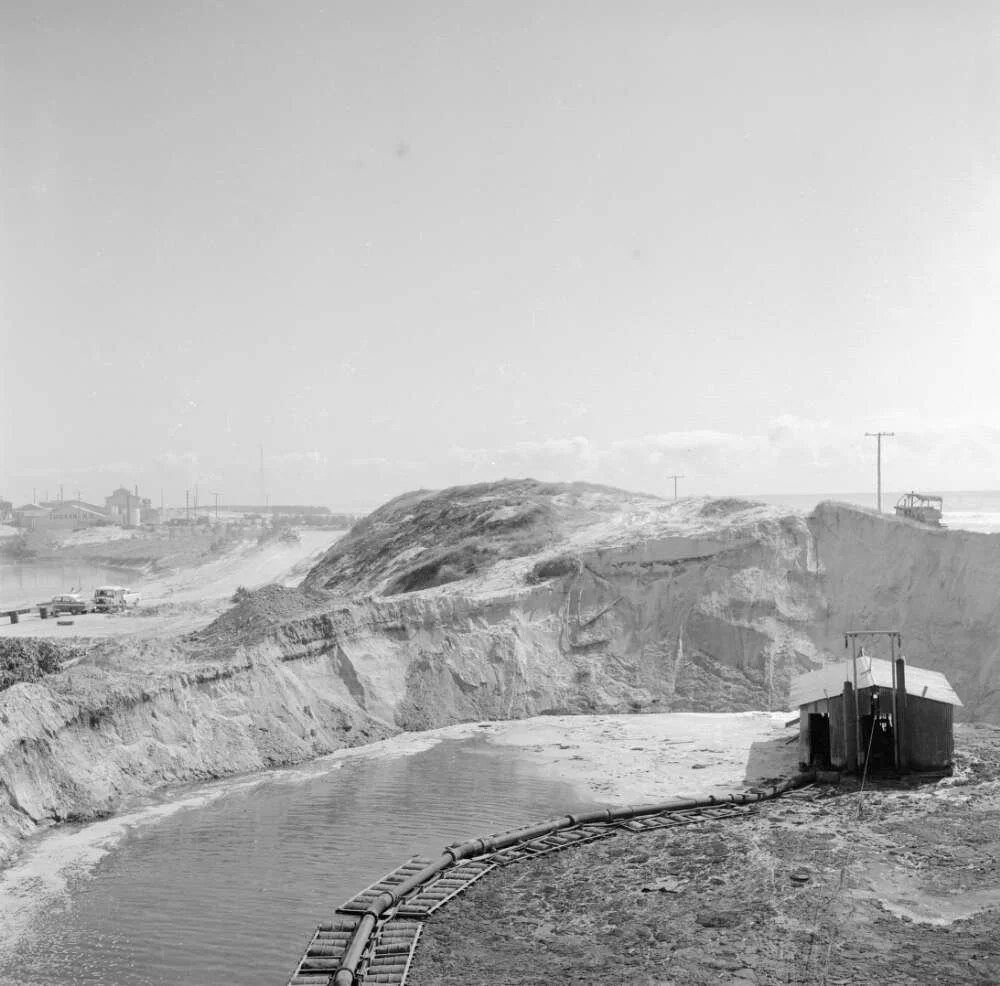
Sand mining showing the dredge at ore face between Cudgen Creek and the ocean near Kingscliff, 1964.
Photo: Ray Sharpe
"All for fucken paint and warplanes." he said, shaking his head as he walked off towards the fire trail.
I'd been putting zinc on my face in preparation for a surf at a back beach, near where Biiriinba / Clarence River meets the ocean, when he'd pulled into the carpark next to me. Dressed head to toe in high-vis; his grey hair flowing out the back of a battered old broad-brimmed hat. As we greeted each other he reached into the boot of his old car and pulled out the classic bucket of landcare supplies: a pair of battle-hardened gloves, a couple of dinged up trowels and a few sets of rusty secateurs.
We got to chatting as I asked him what he was up to today, to which he responded that a crew was planting on the fore dunes, and the conversation eventually meandered through species selection, local ecosystems and, inevitably, their past destruction.
"I grew up here in Iluka. Back in the 50s we used to run rampant all over the dunes as kids. They woulda been a good 40 to 50 metres high back then" he said with a distant look, as he recalled memories from a distant trove. I'd spent the last few days bushwalking in a remnant area of World Heritage rainforest nearby with my son, and noted how grateful I was that something of the past had survived. Those small parcels of ancient littoral and fringing rainforest evaded the vast destruction of the sand mining dredges thanks only to significant community opposition.
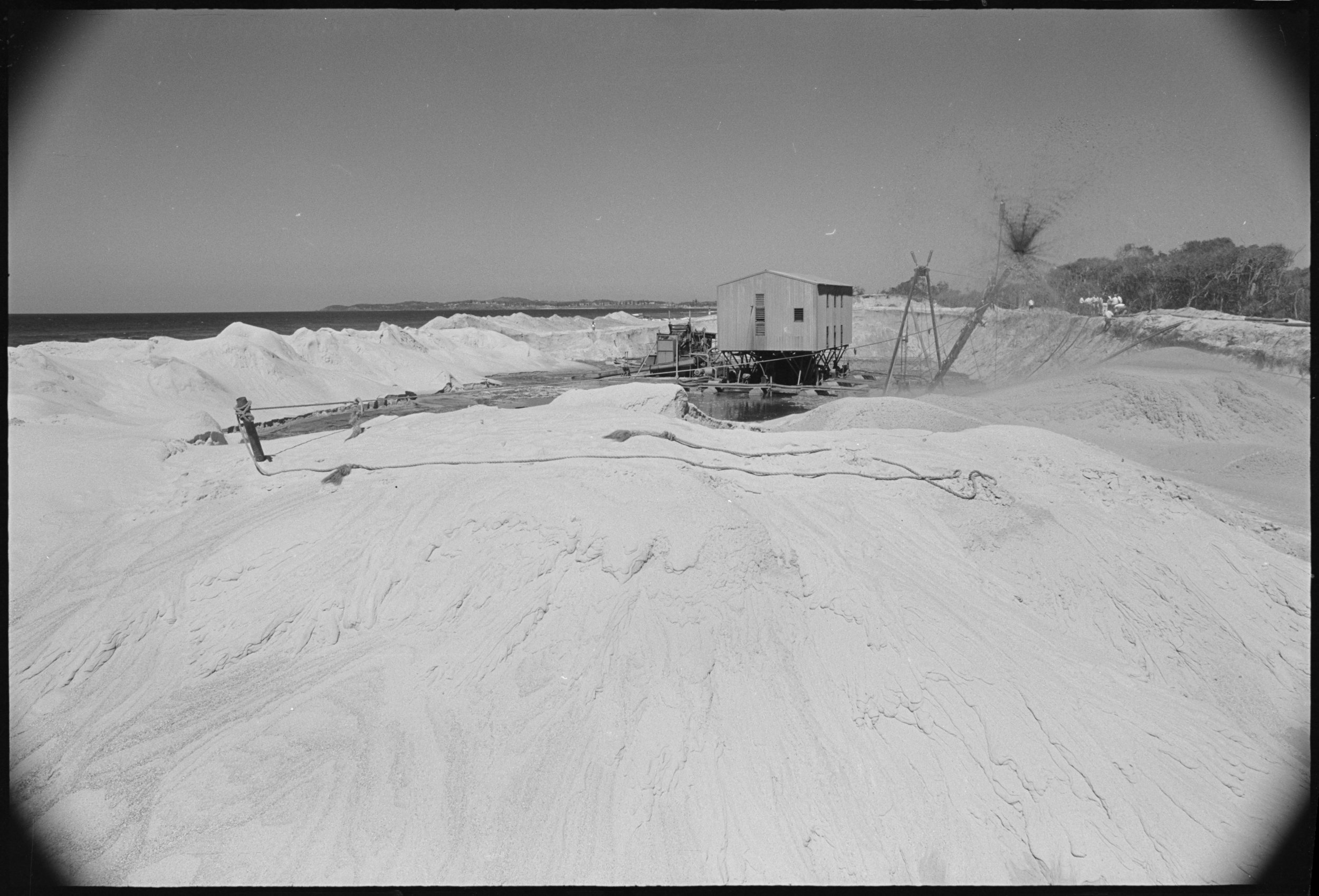
Sand mine north of Byron Bay, 1966
Photo: R Donaldson
So, when I got home after a hiatus from screens of all kinds, I decided to delve into a bit of the history behind arguably the most influential change to coastal landscapes in modern history in the Northern Rivers.
In 1934 Zircon Rutile Limited was formed in Byron Bay and mining started on Seven Mile Beach near Lennox Head a year later. Originally dug by hand, it would have been back-breaking work as workers went below ground in search of the mineral-heavy black sand below – sand that had built up mostly undisturbed in coastal ecosystems for thousands of years. The two main minerals mined were Zircon – used for ceramics, foundry and enamel– and Rutile which was a crucial part of paint, plastics and titanium metal.
By the middle of the century, technology had improved and the introduction of floating dredges (pictured above) meant the rate of processing sped up the extensive destruction of the coastline. By the 1950s Zircon Rutile began the process of rehabilitating dunes along the coast, as incidents of the ocean breaking through mined dunes and increased coastal erosion began to stir up opposition to the burgeoning industry. Rehabilitation was often questionable at best, with the 'tailings' sand returned in-situ, which lacked both structure and nutrients to support a healthy coastal ecosystem. Often the seed introduced to regrow the dunes were the much-maligned bitou bush, which has taken decades to remove and still exists in the less frequented corners of the North Coast. the In the late 60s sand mining ground to a halt with processing at the Byron Bay plant eventually ceasing in the early 70s.
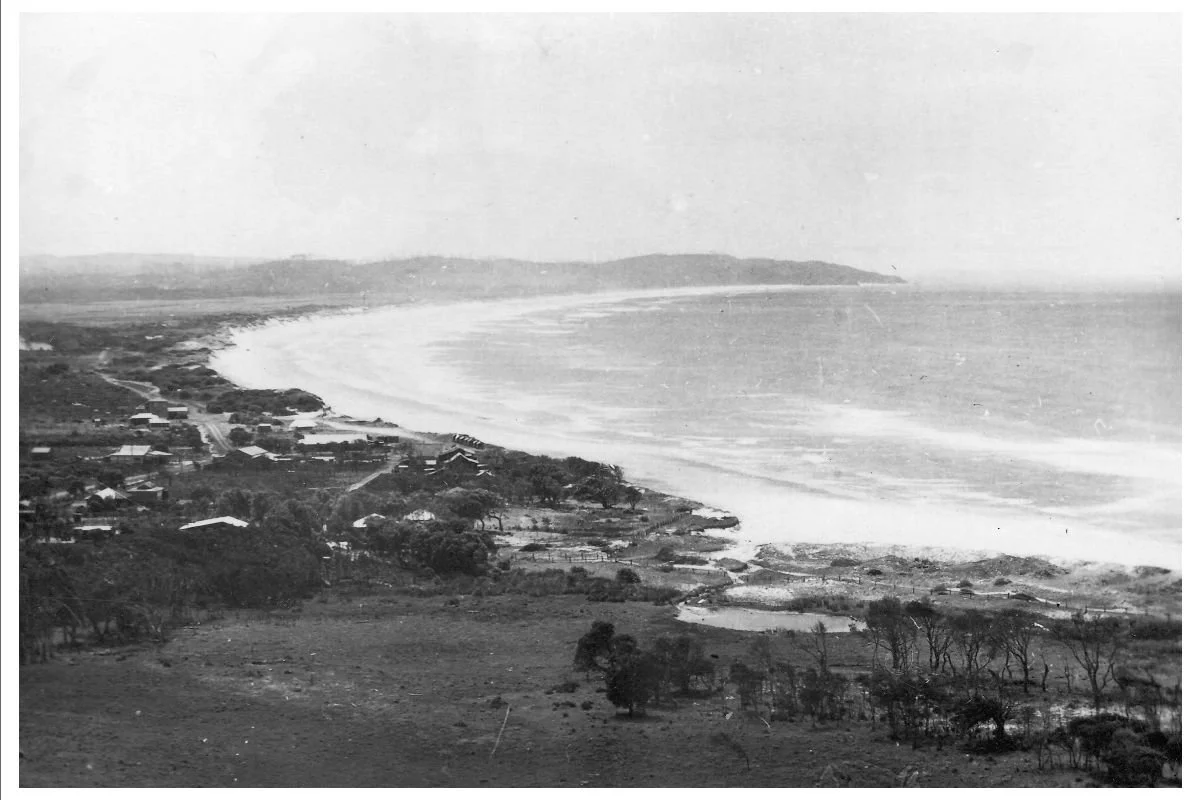
Seven Mile Beach with Lennox Head in the foreground. Large foredune systems are visible to the north of the town.
As with all extractive industries the consequences live on long after the production ends. As Zara Pemberton reflects in her article, "you cannot fully undo what industrial-scale sand extraction did to this coastline." As our coasts face increasing pressure from rising sea-levels, more frequent tropical storms and residential developement, the legacy of sand mining is often forgotten. But it remains the catalyst for unstable dune ecosystems – the first line of defence against the power of the ocean.
Rehabilitation efforts from the Tweed to the Clarence have seen a remarkable return of coastal ecosystems. But they remain a shadow of their former selves, lacking complex structure and diversity. I've been involved in some plantings in former sand mining hotspots, and a local landcare volunteer explained one of the crucial issues facing ongoing rehabilitation of these sites. As many of the coastal species like banksia, tuckeroo and wattle begin to grow, they reach a stage in their maturity where the lack of presence of certain minerals – essentially dead sand – stifle root growth and the tree dies. If you pay close attention on your next walk along the beach, you might spot this phenomenon. Ghost trees standing in memorial of the wrongs of the past.
This imbalance can change of course. As trees and shrubs return to the dunes they begin to reintroduce crucial minerals and nutrients into the soil biota. All those failed plantings may look stark, but over time they too will serve a purpose, as decomposition kick-starts an ecosystem in the process of reviving itself. It will take generations to see complexity in these systems again, but it is not impossible. In fact, it is imperative if we are to safeguard our coastlines from future ingress. Seawalls won't save us.
The lessons of sand mining on the north coast are there to be learned. But a quick internet search of zircon and rutile shows mass extraction continuing in places like Sierra Leone, by a company ironically called Iluka Resources. Coastlines destroyed all for some paint and a few warplanes... you have to ask the question: was it worth it?
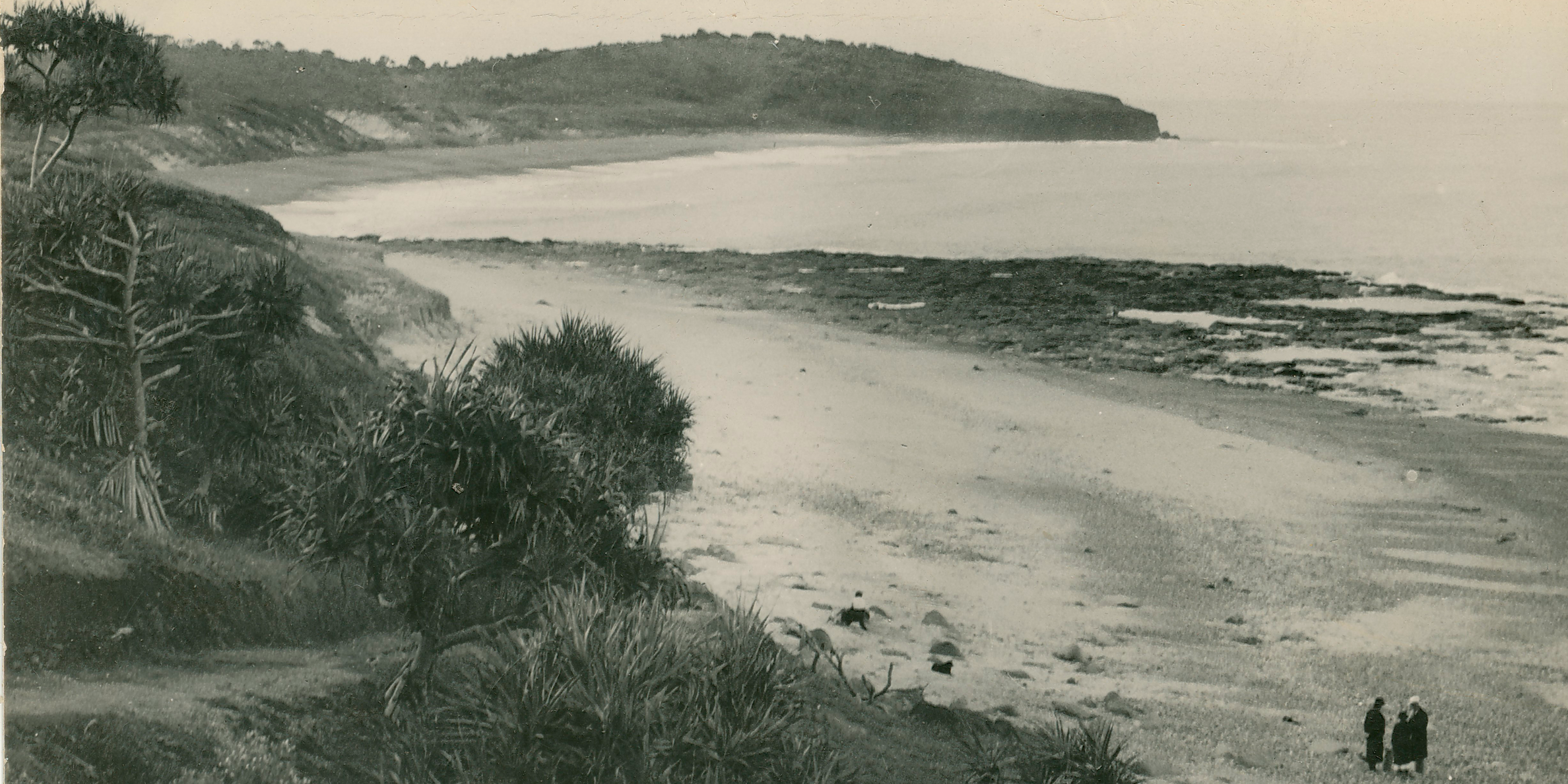
Shelley Beach, Ballina before sand mining with large dunal ecosystems present. Note also the original headland before rock was quarried to build the training walls which would eventually divert the mouth of the Richmond River further south.